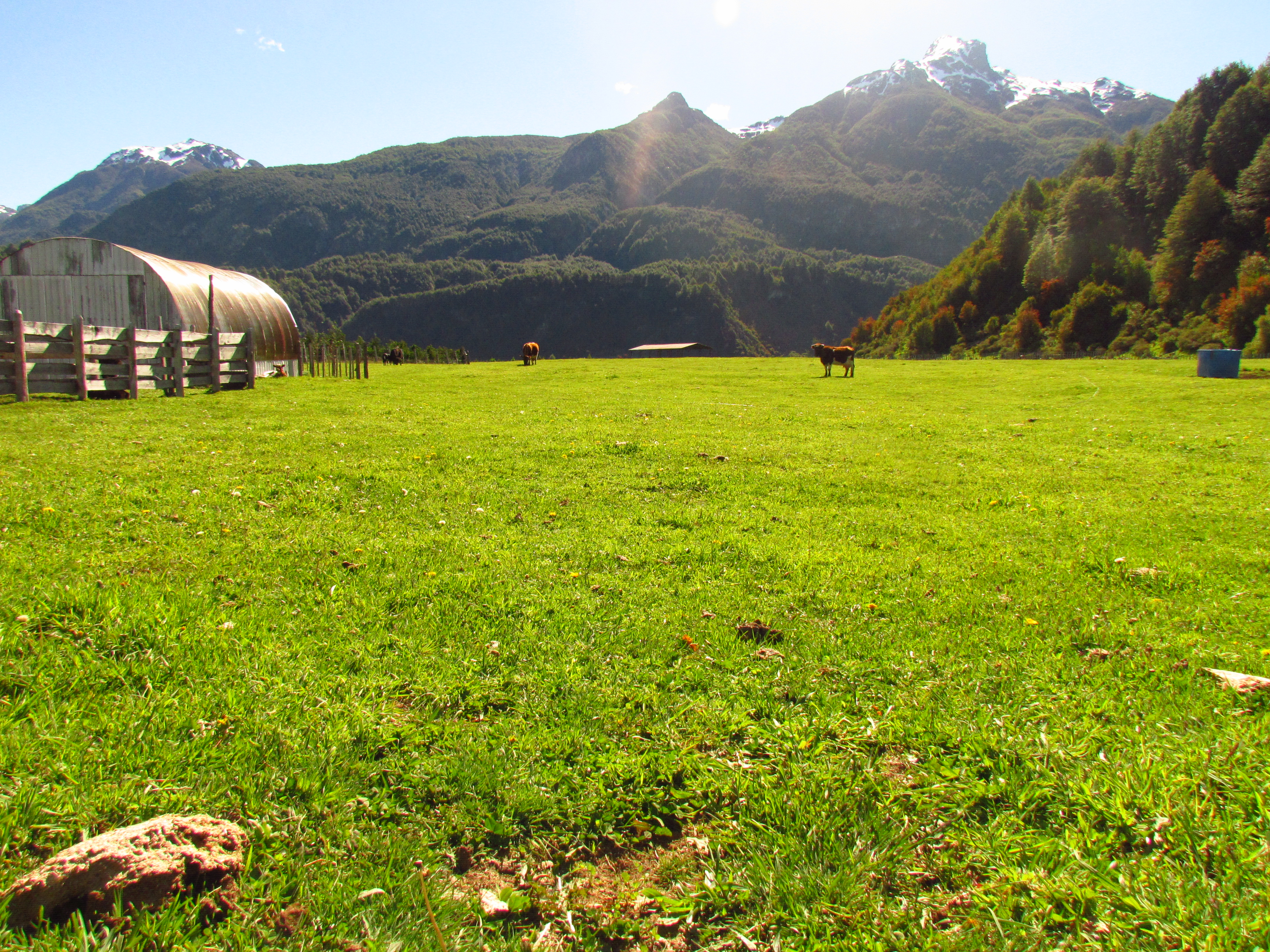
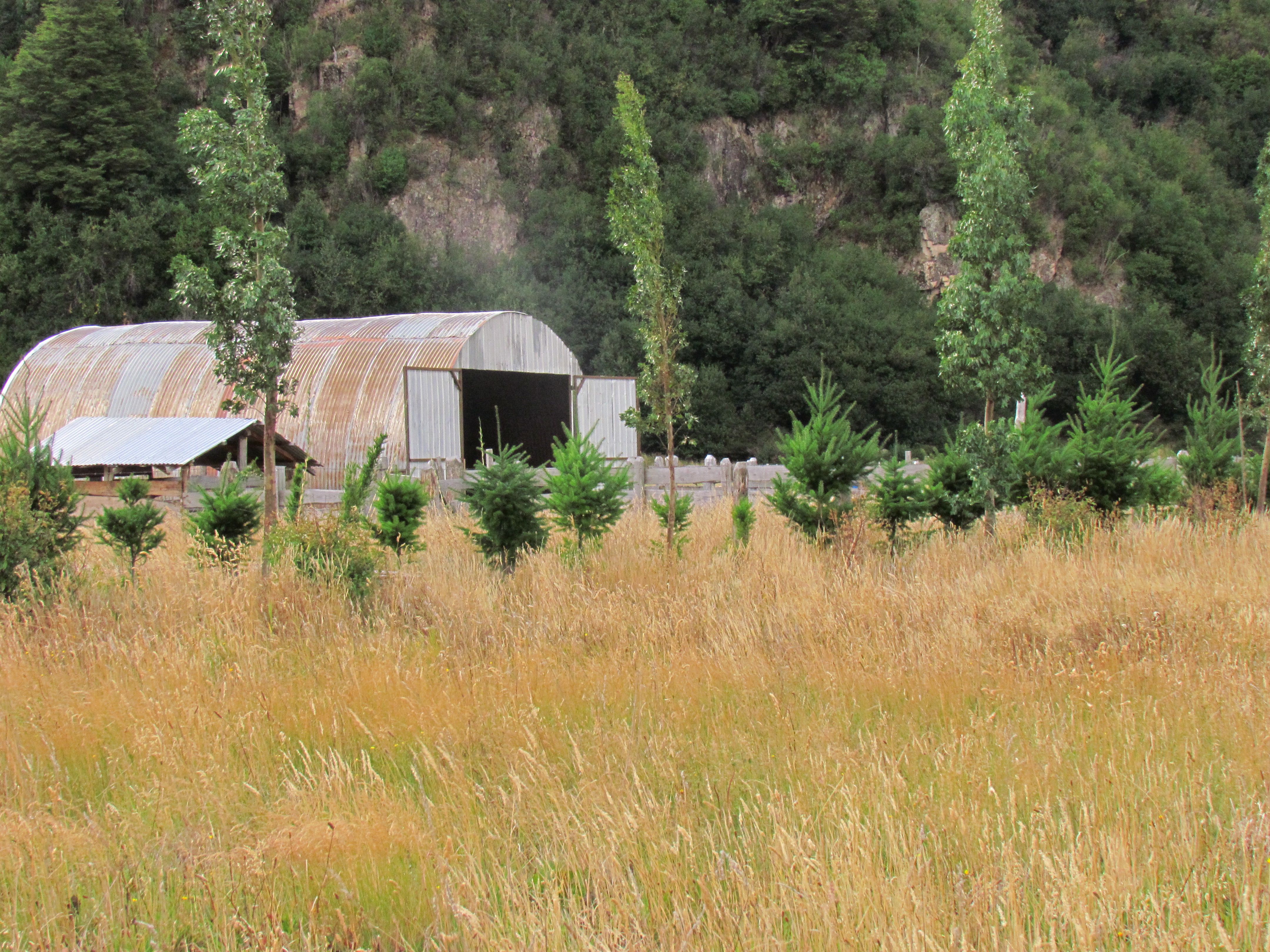
Fundo La Pampita did not become what it is overnight. The earliest photos show a territory in progress: open pastures with none of the protection from the windbreak corridors that structure the property today, and a family beginning to understand the real conditions of working in deep Patagonia. What exists today in Manihuales, Aysén Region, was built year by year, decision by decision.
2013 — 2014 · The earliest photos
.JPG)
.JPG)
Fundo La Pampita, 2013-2014 — Manihuales, Aysén Region, Chilean Patagonia.
When we started, the flat part of the property didn't have a single tree. Fires from the last century had cleared the native forest to gain farmland, and the soil we inherited was the result of that process: fertile in some areas, but exposed to the wind and with little vegetation structure. The early work was about reading the land: understanding which sectors had better drainage, where there was real potential for pasture, and where the soil needed time before it could produce.
By 2014, the first changes were visible though still modest. Windbreak corridors began to line up along the paddock edges, pastures were being established with seed mixes adapted to Aysén conditions, and the property's first animals were starting to learn the terrain. The aerial view from those years shows the scale of the challenge: a broad property in a Patagonian valley, surrounded by hills and crossed by the southern wind.
What began as a treeless property with much to build is today a functioning agroforestry system that combines livestock farming, beekeeping and artisanal production under the Productos La Baguala brand. If you're interested in seeing Fundo La Pampita up close — how the forest, the pasture and the animals come together in deep Patagonia — write to us to coordinate a visit.